Health & Healthy Living
How to Improve Sleep Naturally
Forget expensive sleep gadgets and elaborate nighttime rituals. The most elegant approach to better rest may be surprisingly old-fashioned.
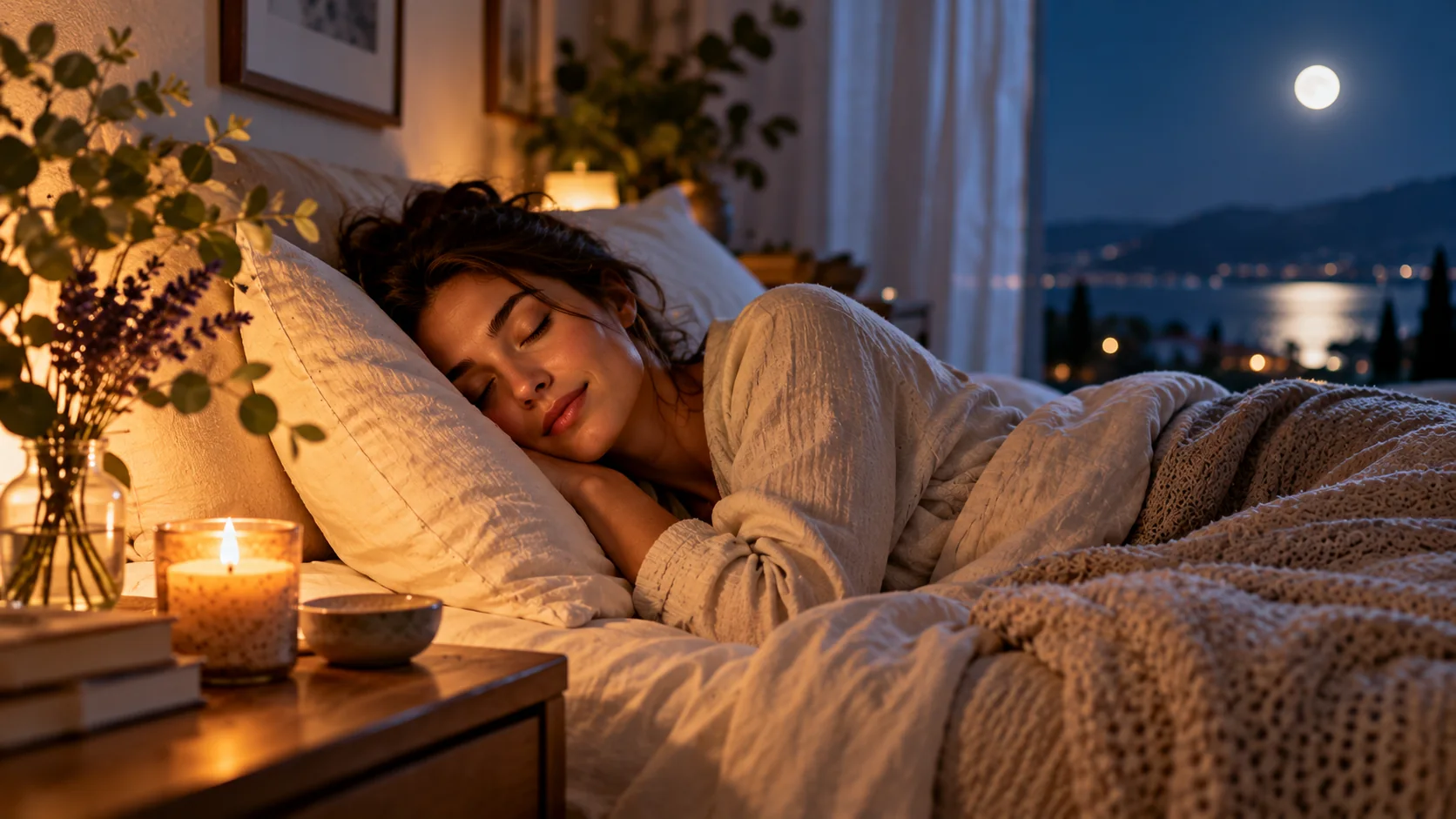
We have turned sleep into an industry. There are mattresses that cost as much as a small holiday, watches that grade our nights, and bedside devices promising to reproduce the sounds of a distant rainforest. Apparently, even closing our eyes now requires accessories.
Some of these inventions are useful. But the growing fascination with sleep technology raises an awkward question: have we become so preoccupied with measuring our rest that we've forgotten how to make room for it?
Sleep is influenced by far more than the final hour before bedtime. Light, daily routines, physical activity, and the timing of our coffee all play a part. Improving it often begins with decisions made long before we enter the bedroom.
The Morning Has More to Do With Sleep Than You Think
Our bodies follow a circadian rhythm, an internal system that helps regulate when we feel alert and when we become sleepy. Light is one of its most important signals, which makes morning daylight particularly useful.
A walk outside after breakfast helps reinforce that rhythm. Even on an overcast day, outdoor light is generally brighter than ordinary indoor lighting. Keeping a consistent waking time also helps the body maintain a predictable sleep schedule.
Then there is coffee, one of civilization's more defensible pleasures. Caffeine affects sleep for hours after we've finished drinking it, although sensitivity differs from person to person. If falling asleep has become difficult, moving that afternoon espresso to an earlier hour is worth trying.
Alcohol deserves similar scrutiny. It can make people feel sleepy initially while disrupting sleep later in the night. The evening glass of wine that seems relaxing might be less helpful than its reputation suggests.
None of this requires a rigid timetable. A reliable routine is useful precisely because it can fit into ordinary life.
What We Bring Into the Bedroom
A century ago, the bedroom was unlikely to contain breaking news, work correspondence, and the opinions of several thousand strangers. Today, all three can arrive through a screen small enough to fit in a pocket.
The problem isn't simply that phones are distracting. Bright light in the evening can affect the body's internal clock, while an upsetting headline or an unfinished work conversation can leave us mentally alert long after we've put the device down.
Reducing screen use before bed is therefore a reasonable experiment, particularly for people who routinely scroll until they fall asleep. It needn't involve an elaborate digital detox. Charging the phone outside the bedroom, turning off work notifications, or establishing a time when the news can wait is a sensible place to start.
A printed book offers an appealing alternative. No battery to charge, no messages appearing across the page, and no algorithm suggesting that the next chapter should be a video about something entirely unrelated.
Science, for once, agrees with the romantics. In a 2015 study at Brigham and Women's Hospital in Boston, twelve volunteers spent five evenings reading from a printed book and five reading on a light-emitting electronic device before bedtime. Compared with the printed-book condition, the illuminated screen was associated with taking longer to fall asleep, delayed melatonin timing, and reduced alertness the following morning. It was a small laboratory study, but its findings offer a good reason to reconsider brightly lit screens at bedtime.
Perhaps the ultimate modern luxury is not being connected to everything, but having the freedom to disconnect from it all.
For readers who find comfort in faith, Scripture or a thoughtful Christian reflection offers a welcome transition from the demands of the day. Others may prefer a novel, poetry, or a few quiet pages of history. The choice matters less than finding an activity that allows attention to settle.
A Bedroom Doesn't Need to Be a Wellness Showroom
The essentials of a comfortable sleeping environment are reassuringly uncomplicated: a room that is dark, quiet, and comfortably cool, with bedding suited to the season.
There is no universal ideal temperature, and expensive products are rarely a prerequisite for better rest. Blackout curtains might help someone whose bedroom faces a streetlight. Another person could benefit from reducing noise or replacing an uncomfortable pillow.
Even what we wear to bed deserves a moment's thought. Loose, breathable cotton lets the skin stay cool and dry through a warm night, and a soft drawstring is kinder than a waistband that leaves its mark by morning. Some people sleep best wearing even less, and there is no reason to argue with them. Comfort, for once, is the height of elegance.
Regular physical activity supports sleep, too. The goal is to make movement part of daily life rather than introduce another demanding ritual that must be performed perfectly.
And while consistency is valuable, an occasional late dinner or restless night does not mean a carefully cultivated routine has failed. Anxiety about sleeping well can become another obstacle to sleep.
When Better Habits Aren't Enough
Most adults need at least seven hours of sleep per night, according to the CDC, although individual needs vary. Persistent difficulty falling asleep, frequent waking, or daytime exhaustion deserves attention, especially when it interferes with work, relationships, or everyday functioning.
Chronic insomnia is not necessarily solved by changing pillows or drinking herbal tea. Cognitive behavioral therapy for insomnia, known as CBT-I, is a recommended first-line treatment. A healthcare professional can also assess whether medication, sleep apnea, another medical condition, or other factors are contributing to the problem.
The Pleasure of an Ordinary Evening
Perhaps the most useful change is also the least fashionable: allowing an evening to be uneventful.
Dinner is finished, tomorrow's obligations can wait, and the bedroom is simply a place to rest. There is no score to improve and no need to turn relaxation into another accomplishment.
We spend so much of modern life trying to use every available minute efficiently. Sleep asks us to accept something rather different: that several hours of apparent inactivity are essential to everything we hope to do while awake.
A good night doesn't have to be impressive. It only has to leave us ready for the morning.
Sources & further reading
This article provides general health information and does not replace individualized medical advice.