Work & Purpose
Why Financial Peace Matters More Than Being Rich
Why security, breathing room, and choices can matter more than an impressive income.
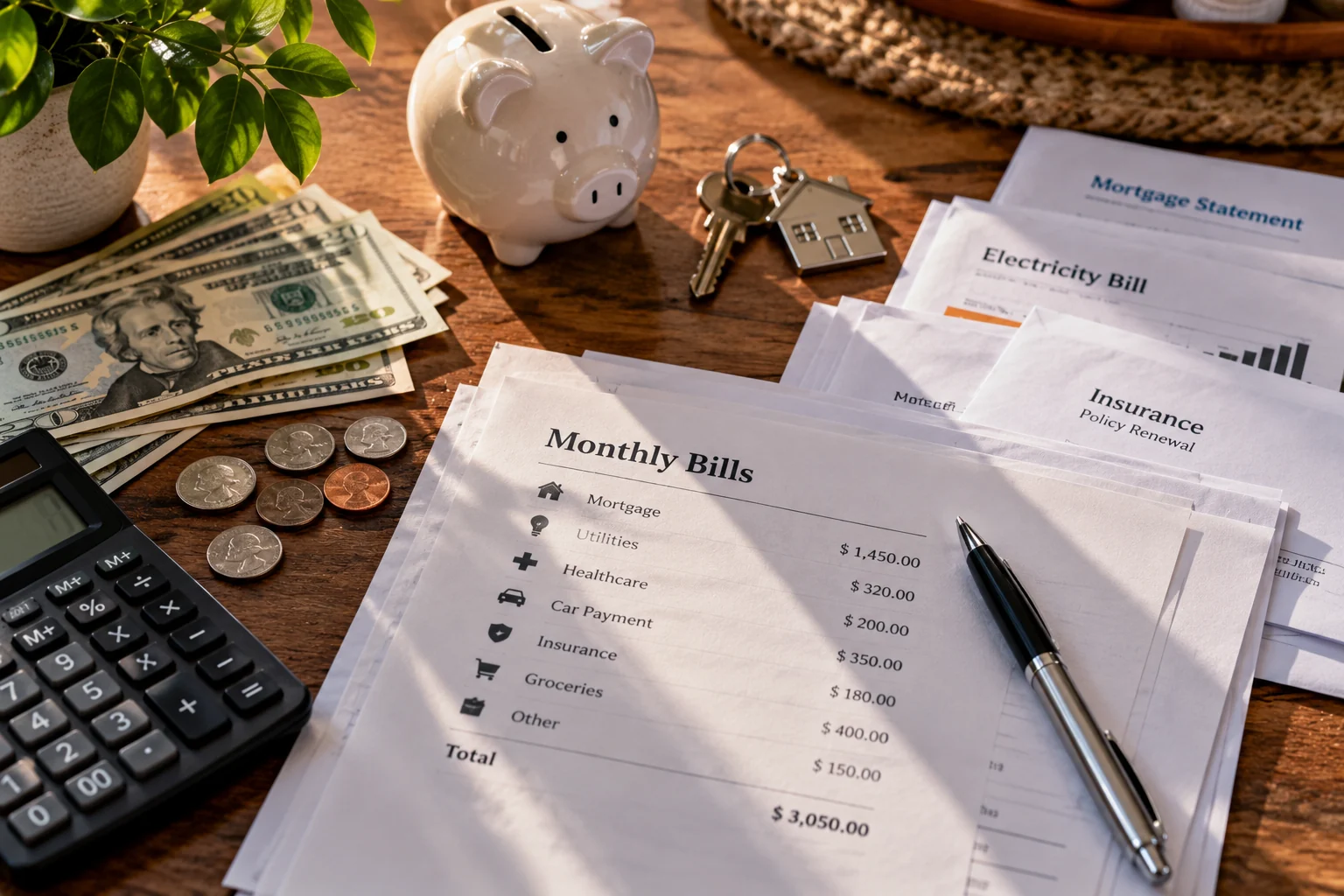
A promotion arrives with a generous salary increase. For a few weeks, the future looks different. Perhaps the family can finally move into a larger house, replace the aging car, or stop worrying about the price of groceries.
Then the new salary becomes ordinary. The larger house brings a larger mortgage. The new car has a monthly payment. The family earns more than it did two years ago, yet the feeling of financial security remains strangely out of reach.
It is tempting to explain this entirely through overspending. Sometimes people do allow their expenses to rise with their income. But in a country where housing, healthcare, childcare, and everyday necessities can absorb much of a paycheck, financial insecurity deserves a closer examination.
Much of what people hope to gain by becoming wealthy is surprisingly ordinary: the ability to pay their bills without anxiety, survive an unexpected expense, and make decisions without constantly calculating what they can afford.
What the Numbers Don't Tell Us
In May 2026, the Federal Reserve published its report on the economic well-being of American households. Based on responses collected in 2025, it found that 73% of adults described themselves as either doing okay financially or living comfortably.
Yet 16% had not paid all their bills in full during the previous month, while 26% had skipped medical expenses because of cost during the preceding year. The report also found that 59% had faced at least one major unexpected expense in the past twelve months.
These figures measure different experiences, but together they reveal the financial pressures that can exist beneath an apparently comfortable standard of living.
The Federal Reserve also found that 63% of adults could cover a hypothetical $400 emergency using cash or its equivalent, including a credit card balance paid off at the next statement. The remaining 37% would need another approach, could not cover the expense, or were uncertain. For someone already managing a tight budget, an unexpected $400 bill can trigger weeks of difficult decisions.
A household may have a decent income, a reliable car, and a comfortable home while remaining one unexpected expense away from serious financial strain.
The Difference Between Income and Security
The Consumer Financial Protection Bureau defines financial well-being through several dimensions: managing regular obligations, absorbing financial shocks, making progress toward financial goals, and having the freedom to make choices that allow people to enjoy life.
Imagine receiving an offer for a better job in another city. You would like to accept it, but moving would require a deposit, several weeks of expenses, and perhaps a period without income. Without savings, the opportunity may be impossible.
Or consider someone who wants to reduce working hours to care for an aging parent. The decision may have little to do with ambition and everything to do with whether the household can survive a smaller paycheck.
A financial cushion can create room to make decisions before circumstances make them for us.
This is why two people earning the same salary may experience entirely different levels of security. One has manageable housing costs and family support. The other has substantial debt, expensive medical needs, or relatives who depend on their income.
A salary figure tells us surprisingly little about how much freedom either person actually has.
The Expensive Performance of Success
Professional success often comes with an unofficial list of purchases: the better neighborhood, the newer vehicle, the renovated kitchen, the vacations that look effortless in photographs.
A comfortable home can improve family life, a dependable car may be essential for work, and travel can be deeply rewarding. The difficulty arises when these purchases become evidence that we have reached the level of success expected of us.
An expensive lifestyle can gradually turn a good salary into a collection of obligations. The paycheck arrives, and most of it already belongs to someone else.
Financial advisers sometimes call this lifestyle inflation: spending rises alongside income, leaving little additional room for savings or unexpected expenses.
But we should distinguish expensive habits from unavoidable costs. Someone paying high rent because affordable housing is scarce cannot simply budget their way into a cheaper city. A parent facing substantial childcare expenses is not performing success by paying for care.
The same financial advice cannot reasonably apply to a household stretched by necessities and one stretched by luxury payments. Higher income can make an enormous difference when basic needs are insecure, and the Federal Reserve's findings confirm that lower-income adults are substantially less likely to report financial comfort.
Once a household has enough to cover its needs, however, the question becomes what additional income actually accomplishes. It may reduce debt, build savings, or create flexibility. It may also finance commitments that make the higher salary indispensable.
Financial peace begins when money gives us room to choose, rather than forcing us to protect the appearance of success.
The Freedom to Say No
One of the least glamorous benefits of financial stability is the ability to refuse something. You can turn down work that would damage your health, decline a purchase without feeling embarrassed, or help a relative without immediately placing your own household at risk.
For many Americans, that freedom remains distant. A family struggling to cover rent and groceries needs more income before it can begin building a meaningful financial cushion. Someone with substantial debt may have to devote years to regaining flexibility. Even a carefully managed household can be destabilized by illness, unemployment, or an unexpected family obligation.
The CFPB's framework recognizes that security involves more than the balance in a bank account. It includes having some control over what happens next.
That control can develop gradually. Paying down expensive debt may create breathing room. Building modest emergency savings can make an unexpected repair less frightening. Finding more affordable housing or increasing household income may change what is possible altogether. The appropriate path depends on circumstances, and financial peace should never be confused with permanent immunity from worry.
What Are We Working Toward?
Before accepting the next promotion, upgrading the car, or committing to a larger mortgage, it may be worth asking what the decision will actually make possible.
Perhaps the answer is important: better housing, greater security for children, or the ability to care for family. Those are meaningful reasons to pursue a higher income and accept substantial commitments.
But sometimes the answer is less convincing. We want the new purchase because it seems appropriate for someone at our stage of life, or because everyone around us appears to have one.
A higher income can make life better. It can also make an expensive life harder to leave.
The difference becomes apparent in ordinary moments: when the car breaks down, when a child needs help, when a job no longer feels sustainable, or when an opportunity arrives without much warning. At those moments, the most valuable thing money can provide may be time to think before deciding.
Perhaps that is a more useful measure of prosperity than the number printed on a paycheck: how much of your life can you still choose?
Sources & further reading
Editorial note: This article provides general financial information and does not constitute personalized financial, investment, or legal advice. Individual circumstances and financial needs vary.